Tanzania Cancels Independence Day Celebrations After Calls for Protests
- Home
- Tanzania Cancels Independence Day Celebrations After Calls for Protests
Tanzania Cancels Independence Day Celebrations After Calls for Protests
Tanzania Cancels Independence Day Celebrations After Calls for Protests
Dar es Salaam, 25 November 2025 — Tanzania has officially called off its planned Independence Day celebrations on 9 December, as the East African nation grapples with violent unrest and mounting political tension in the wake of its controversial October 29 general election. (Africanews)
Prime Minister Mwigulu Nchemba announced the decision on Monday, saying that the funds originally allocated for the event will instead be re-directed toward rebuilding infrastructure damaged during weeks of post-election unrest. (Africa Press English)
You may like to read: https://directgist.com/nigeria-unshaken-by-trumps-tariffs-trade-policies-tinubu/
“On 9 December there will be no commemorative celebrations,” Nchemba declared, instructing relevant agencies to ensure all funds are reallocated to repairing roads, public buildings and other facilities damaged in recent violence. (allAfrica.com)
The cancellation comes amid growing calls from opposition parties and civil society for mass protests on Independence Day — dubbed “D9” — to demand accountability for the deadly crackdown that followed the contested vote. (thevoiceofafrica.com)
The Context: Election Fallout and Rising Tensions
On 29 October, Tanzania held a general election that saw President Samia Suluhu Hassan re-elected with 98% of the vote. Many key opposition figures had been either jailed or disqualified on “technical grounds,” prompting widespread accusations that the vote was rigged. (Africanews)
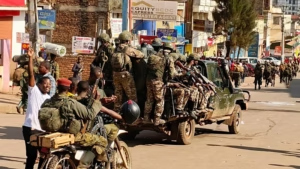
Opposition parties and youth activists rejected the results as a “mockery of democracy,” and called for protests immediately. Demonstrations erupted across major cities, including Dar es Salaam and Dodoma. Security forces responded with a heavy-handed crackdown — imposing curfews, shutting down the internet, and deploying both police and military units. (The Chanzo Inititative)
Rights groups and opposition leaders say hundreds — possibly thousands — were killed, though the government has yet to release any official death toll. Instead, President Samia has established a domestic “Commission of Inquiry” to investigate the events. Critics, however, say the body lacks independence. (Africanews)
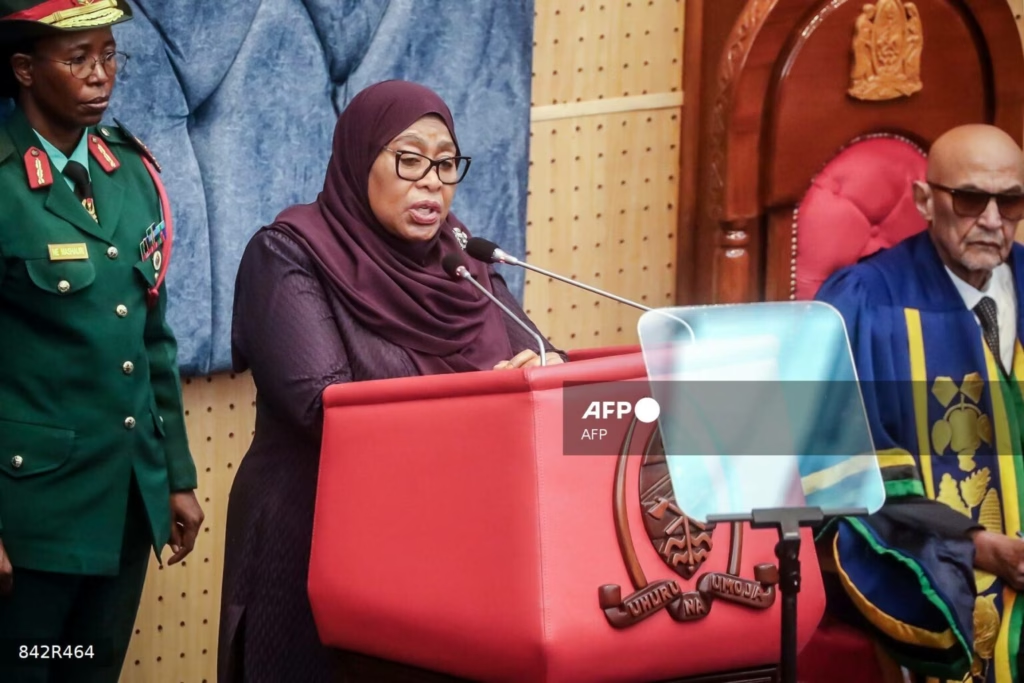
Last week, the president told parliament the commission will help “inform reconciliation and peace efforts,” and also pledged constitutional reforms within her administration’s first 100 days. (Africanews)
Why Independence Day — and Why Cancel It?
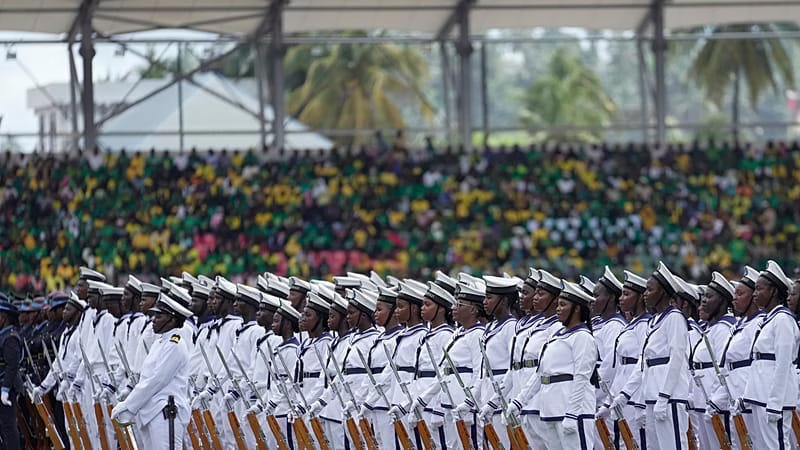
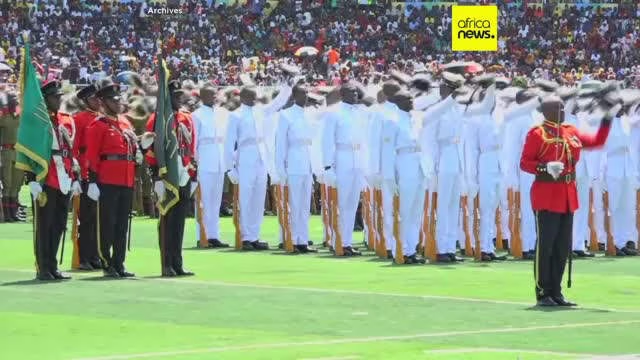
December 9 marks Tanganyika’s Independence Day — the day in 1961 when the country gained freedom from British colonial rule. Later, Tanganyika merged with Zanzibar to form what is now the United Republic of Tanzania. The national holiday is traditionally celebrated with a presidential address, military parades, cultural events, and broad public participation. (allAfrica.com)
This year, however, the opposition and civil society saw the 64th-anniversary celebrations as an opportunity for a nationwide protest against perceived electoral injustice and state violence. Organizers dubbed the planned demonstration “D9.” (APAnews – Agence de Presse Africaine)
By canceling the celebrations, the government says it seeks to reallocate resources to repairing damage from the unrest — a move that also appears designed to forestall mass protest on that symbolic day. (Africa Press English)
Prime Minister Nchemba urged Tanzanians to avoid violence and instead engage in political dialogue:
“I urge my fellow Tanzanians to come together … Let us not return to what we went through, because the consequences are irreparable.” (APAnews – Agence de Presse Africaine)
Reactions and International Attention
- Opposition and civil society: Many welcomed the cancellation as a recognition of the country’s deep crisis. However, some voiced concern that redirecting funds and canceling celebrations could be a tactic to suppress dissent and avoid accountability.
- Human rights organizations: They have repeatedly demanded an impartial, independent international investigation, rather than a domestic commission perceived as loyal to the ruling party.
- International bodies and foreign governments: The United States Senate Foreign Relations Committee has called for an “immediate and independent investigation” into alleged killings — citing a CNN-led investigation that documented deadly crackdowns, satellite imagery, geolocated videos, and possible mass graves. (People Daily)
- Economic analysts: Some warn that the unrest — combined with the disruption of trade (especially through Dar es Salaam port) and informal business — could weigh heavily on Tanzania’s economy. Redirecting funds to rebuild infrastructure is seen as necessary, but many emphasize that long-term political stability is essential. (Africa Press English)
What’s Next?
- Commission of Inquiry: The government’s commission is expected to present findings in the coming weeks. Will it satisfy critics calling for transparency and justice?
- Opposition’s next move: With D9 protests effectively blocked, opposition groups may shift tactics — possibly ramping up calls for external oversight or pushing for constitutional reforms.
- International pressure: Ongoing scrutiny from foreign governments and rights bodies may impact Tanzania’s diplomatic relations and foreign aid prospects.
- Social cohesion and reconciliation: The cancellation of celebrations could deepen national divisions or — if handled well — open a window for meaningful political dialogue. Much depends on how the government, opposition, and civil society respond in the coming days.
Tanzania’s decision to cancel its Independence Day celebrations is more than a logistical announcement. It underscores how severely the disputed election and subsequent violence have shaken the nation — making what is normally a moment of pride and unity instead a symbol of division, pain, and political uncertainty.
- Share

Direct Gist
Recent Posts
- Easiest Ways To Make Money Online That Actually Work (Without Skills)

- HostGator Web Hosting: The Trusted Hosting Solution Powering Over 9 Million Websites Worldwide

- Modern Conversations on Intimacy and Sexual Wellness in Africa

- E-Commerce Growth in Africa: How Digital Marketplaces Are Transforming Trade, Business, and Consumer Access

- Health & Wellness Trends in Africa: How the Continent Is Redefining Well-Being in the 21st Century
- Nudco Is Redefining Intimacy: Why Comfort, Confidence, and Sexual Wellness Belong in Everyday Conversations

- Thousands Flee South as Fighting Intensifies Despite New Peace Deal