Rising Middle East Tensions Push Global Oil Prices Higher, Triggering Economic Concerns Worldwide
- Home
- Rising Middle East Tensions Push Global Oil Prices Higher, Triggering Economic Concerns Worldwide
Rising Middle East Tensions Push Global Oil Prices Higher, Triggering Economic Concerns Worldwide
Escalating tensions in the Middle East are once again sending shockwaves through the global economy, with oil prices surging past critical levels and raising fears of inflation, economic slowdown, and financial instability.
The region, long considered the heart of global energy supply, plays a crucial role in determining oil prices. Any disruption—whether political, military, or economic—can have far-reaching consequences that extend far beyond the region itself.
As the situation unfolds, governments, businesses, and consumers around the world are bracing for the impact.

What Is Driving the Surge in Oil Prices?
Recent developments involving heightened conflict and geopolitical uncertainty in the Middle East have significantly affected global oil markets. Reports indicate that prices have climbed above $100 per barrel, with some projections suggesting further increases if tensions persist.
Key factors contributing to the surge include:
- Supply disruptions due to conflict
- Concerns over shipping routes
- Market speculation and uncertainty
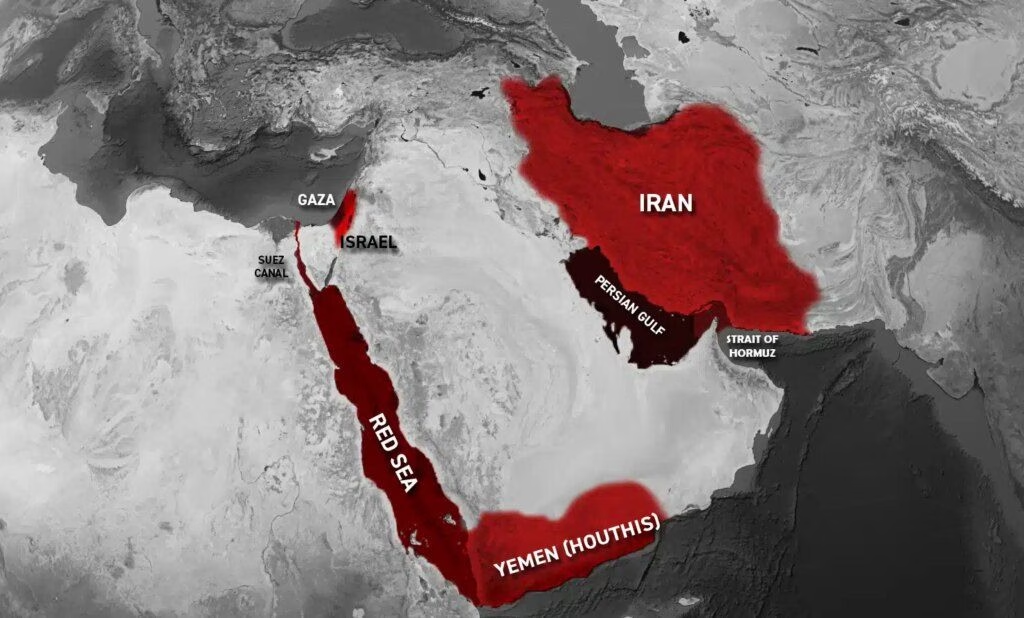
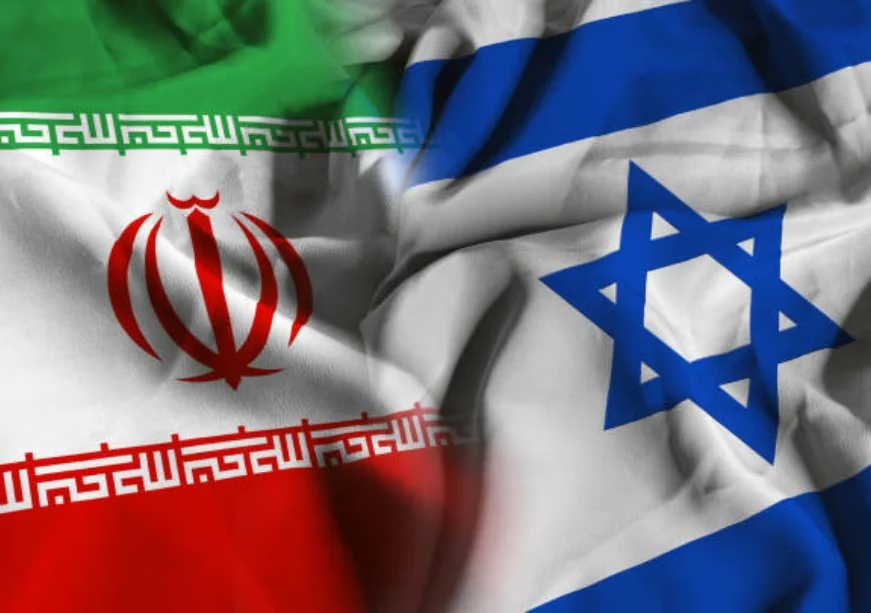
The involvement of key players such as Iran and Israel has intensified global attention.
Why the Middle East Matters to Global Energy
The Middle East accounts for a significant portion of the world’s oil production and exports. Countries in the region are major suppliers to global markets, making stability in the area essential for economic balance.
Organizations like OPEC play a key role in managing oil supply and influencing prices.
When tensions rise:
- Production may be disrupted
- Transportation routes may be threatened
- Investor confidence may decline
All these factors contribute to price volatility.
Immediate Global Impact
The rise in oil prices has immediate consequences across multiple sectors:
1. Increased Fuel Costs
Consumers are already feeling the impact through higher petrol and diesel prices. Transportation costs are rising, affecting both individuals and businesses.
2. Inflation Pressure
Higher energy costs often lead to increased prices for goods and services, contributing to inflation.
3. Economic Uncertainty
Markets tend to react negatively to geopolitical instability, leading to fluctuations in stocks and currencies.
Impact on Africa
African economies are particularly vulnerable to global oil price changes. While some countries benefit as oil exporters, many others face increased costs.
Oil-Importing Countries
Nations that rely on imported fuel may experience:
- Higher transportation costs
- Increased cost of living
- Budgetary pressures
Oil-Exporting Countries
Countries like Nigeria may benefit from higher revenues, but this can be offset by internal challenges such as production constraints.
Impact on Major Economies
United States
The U.S. may experience rising fuel prices, which could affect consumer spending and economic growth.
Europe
European countries, already dealing with energy challenges, could face additional strain.
Asia
Major importers like China and India may see increased production costs, affecting global supply chains.
The Role of Global Markets
Financial markets are closely monitoring the situation. Oil price fluctuations often influence:
- Stock markets
- Currency exchange rates
- Investment decisions
Investors tend to shift toward safer assets during periods of uncertainty, leading to changes in market dynamics.
Shipping and Trade Concerns
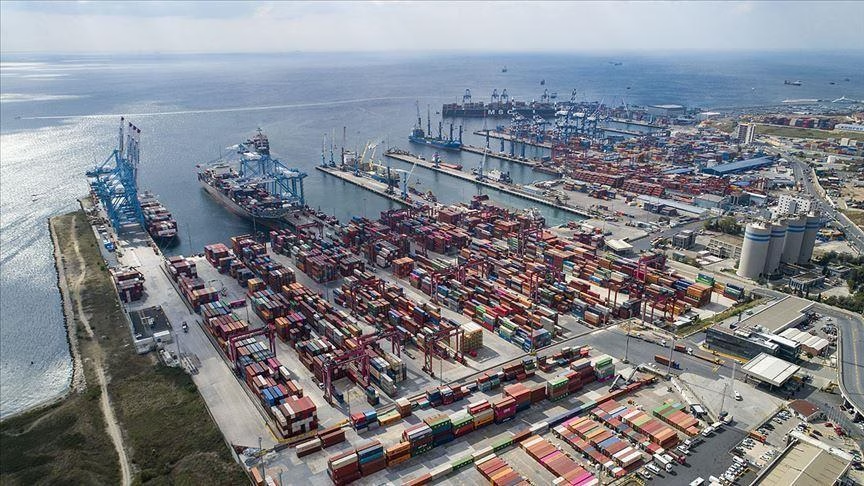
One of the major risks associated with Middle East tensions is the potential disruption of key shipping routes, particularly the Strait of Hormuz—a critical passage for oil shipments.
Any disruption in this area could:
- Delay global supply chains
- Increase shipping costs
- Create shortages in certain regions
This adds another layer of complexity to the situation.
Government Responses
Governments around the world are taking steps to mitigate the impact of rising oil prices. These measures include:
- Releasing strategic oil reserves
- Adjusting fuel subsidies
- Exploring alternative energy sources
However, these solutions are often temporary and may not fully offset the effects of prolonged instability.
Long-Term Implications
The current situation could accelerate global efforts to reduce dependence on fossil fuels. Renewable energy sources such as solar and wind are gaining attention as more sustainable alternatives.
Key trends include:
- Increased investment in clean energy
- Policy shifts toward sustainability
- Technological innovation in energy production
While the transition will take time, the urgency is growing.
The Human Impact
For ordinary people, rising oil prices translate into higher living costs. From transportation to food prices, the effects are felt across all aspects of daily life.
In developing countries, the impact can be particularly severe, as households often spend a larger portion of their income on basic needs.
Expert Analysis
Economists warn that prolonged high oil prices could slow global economic growth. While short-term spikes are manageable, sustained increases may lead to:
- Reduced consumer spending
- Higher production costs
- Lower business confidence
Balancing economic growth with energy stability remains a key challenge.
What Happens Next?
The future of oil prices will largely depend on how the situation in the Middle East evolves. Possible scenarios include:
- De-escalation of Tensions
Prices may stabilize if diplomatic efforts succeed - Continued Conflict
Prices could rise further, increasing global pressure - Market Adjustments
Alternative suppliers may step in to balance supply
Each scenario carries different implications for the global economy.
Conclusion
The surge in oil prices driven by Middle East tensions underscores the interconnected nature of the global economy. Events in one region can have far-reaching consequences, affecting countries, businesses, and individuals worldwide.
As governments and organizations respond to the situation, the focus will be on maintaining stability while exploring long-term solutions. For now, the world watches closely, aware that the outcome of this crisis will shape economic trends in the months ahead.
🔗 Source Links
- https://www.opec.org
- https://www.reuters.com/markets/commodities
- https://www.bbc.com/news/business
- https://www.aljazeera.com/economy
Shop on Comilmart.com
- Share

Direct Gist
Recent Posts
- How to Make Money Online as a Student in 2026 (Step-by-Step Guide)

- Top 10 Most In-Demand Jobs in 2026 (With Salary Insights & Career Paths)

- Best Free Online Courses in 2026 to Boost Your Career (No Payment Required)

- Top 10 High-Income Skills You Can Learn in 2026 Without a University Degree

- Lebanon Crisis Deepens as Mass Displacement Nears One Million Amid Escalating Conflict

- Ukraine War Forces Thousands of Children Into Underground Classrooms as Humanitarian Crisis Deepens

- Rising Middle East Tensions Push Global Oil Prices Higher, Triggering Economic Concerns Worldwide