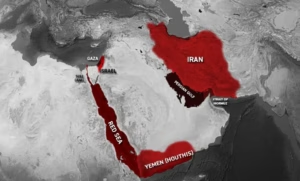
Lebanon Crisis Deepens as Mass Displacement Nears One Million Amid Escalating Conflict
- Home
- Lebanon Crisis Deepens as Mass Displacement Nears One Million Amid Escalating Conflict
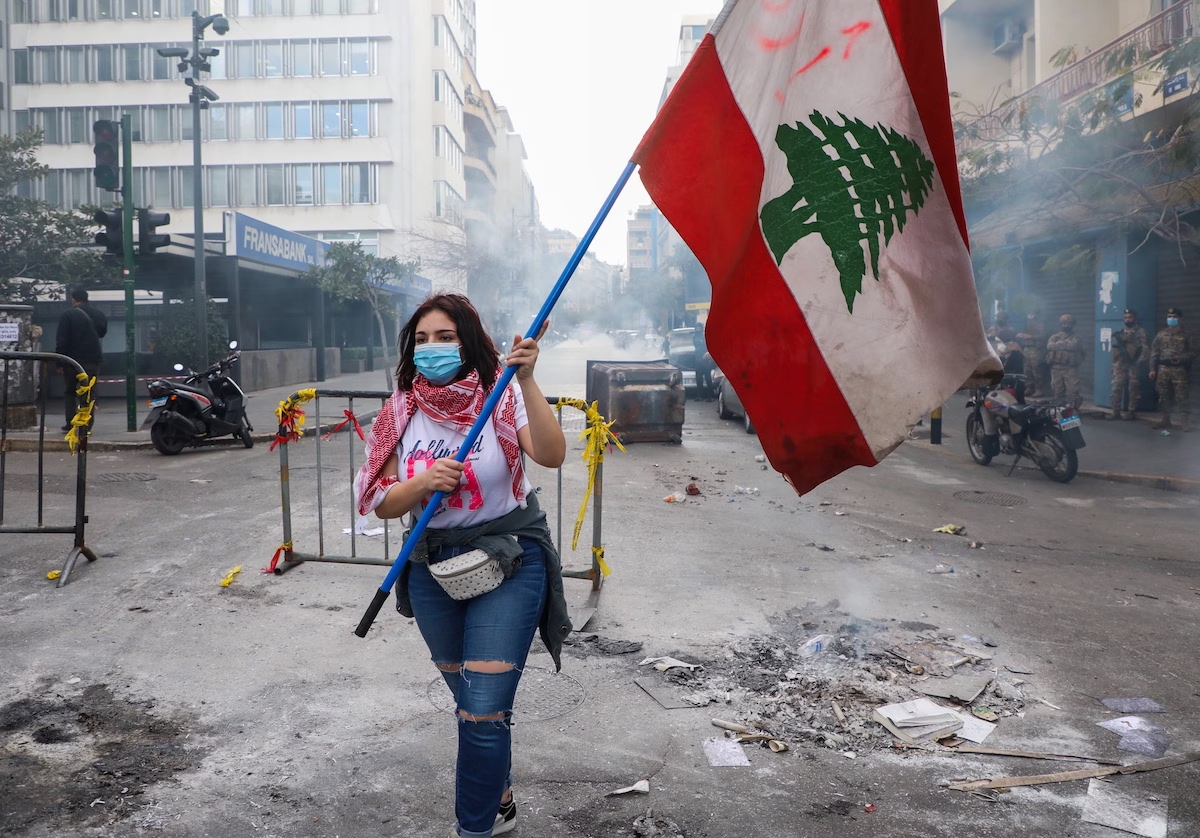
Lebanon Crisis Deepens as Mass Displacement Nears One Million Amid Escalating Conflict
The humanitarian crisis in Lebanon has reached alarming levels as escalating conflict continues to force hundreds of thousands of people from their homes. Recent estimates suggest that close to one million individuals have been displaced, creating one of the most severe crises the country has faced in recent years.
What began as localized tensions has evolved into a widespread emergency affecting civilians across multiple regions. Families are fleeing violence, infrastructure is collapsing, and humanitarian resources are being stretched to their limits.
For a country already grappling with economic instability, this crisis presents an unprecedented challenge.
Escalation of Conflict
The current wave of displacement is largely driven by intensified clashes involving armed groups along sensitive border regions. Tensions involving Hezbollah and neighboring Israel have significantly increased, raising fears of a broader regional conflict.
Airstrikes, artillery exchanges, and security operations have forced civilians to abandon their homes in search of safety. Entire communities have been uprooted, with many seeking refuge in safer urban centers or temporary shelters.
Scale of Displacement
The number of displaced individuals continues to rise rapidly. Humanitarian agencies estimate that:
- Hundreds of thousands have already fled their homes
- Many are living in overcrowded shelters
- Others are staying with relatives or in temporary accommodations
This level of displacement is placing enormous pressure on local infrastructure and services.
Living Conditions for Displaced Families
For those forced to flee, daily life has become a struggle for survival. Many displaced families face:
- Limited access to food and clean water
- Inadequate shelter and sanitation
- Restricted access to healthcare
Children, the elderly, and vulnerable groups are particularly at risk, as resources become increasingly scarce.
Economic Crisis Worsens the Situation
Lebanon was already dealing with a severe economic crisis before the current conflict escalated. Currency devaluation, high inflation, and unemployment have weakened the country’s ability to respond effectively.
The displacement crisis is now compounding these challenges by:
- Increasing demand for basic services
- Straining government resources
- Disrupting economic activities
For many citizens, the combined impact of economic hardship and conflict is overwhelming.
Role of Humanitarian Organizations
International organizations have stepped in to provide critical support. The United Nations and the International Committee of the Red Cross are among those leading relief efforts.
Their work includes:
- Distributing food and medical supplies
- Providing emergency shelter
- Supporting healthcare services
However, funding gaps and logistical challenges continue to limit the scale of assistance.
Healthcare System Under Pressure
Lebanon’s healthcare system is struggling to cope with the influx of displaced people. Hospitals are facing:
- Overcrowding
- Shortages of medical supplies
- Limited staff capacity
Patients with chronic conditions and those injured in the conflict are particularly vulnerable.
Education Disruption
The crisis is also affecting education, with many schools either closed or repurposed as shelters for displaced families. Children are missing out on learning opportunities, raising concerns about long-term impacts on their development.
Efforts are being made to provide temporary learning spaces, but challenges remain.
Regional and Global Reactions
The situation in Lebanon has drawn concern from the international community. Governments and organizations have called for:
- Immediate ceasefire
- Protection of civilians
- Increased humanitarian support
Diplomatic efforts are ongoing, but a lasting solution remains uncertain.
Risk of Wider Conflict
One of the biggest concerns is the potential for the crisis to escalate into a broader regional conflict. The involvement of multiple actors increases the complexity of the situation and raises the stakes.
If tensions continue to rise, the impact could extend beyond Lebanon, affecting neighboring countries and global stability.
Impact on Daily Life
For ordinary citizens, the crisis has transformed daily life. Basic activities such as going to work, attending school, or accessing healthcare have become increasingly difficult.
Fear and uncertainty dominate, as families struggle to adapt to rapidly changing circumstances.
Voices from the Ground
Residents and displaced individuals have shared stories of loss and resilience. Many describe:
- Leaving homes behind with little notice
- Facing uncertain futures
- Relying on community support for survival
Despite the hardships, there is a strong sense of solidarity among affected communities.
The Role of Media
Media coverage has played an important role in raising awareness about the crisis. International news outlets are highlighting the humanitarian impact, helping to mobilize support and resources.
However, challenges remain in ensuring accurate and comprehensive reporting.
Long-Term Implications
The displacement crisis could have lasting effects on Lebanon’s social and economic fabric. Key concerns include:
- Prolonged displacement
- Economic decline
- Social tensions
Rebuilding will require significant investment and coordinated efforts.
The Way Forward
Addressing the crisis will require a multi-faceted approach:
- Humanitarian Assistance
Scaling up aid to meet immediate needs - Diplomatic Efforts
Working toward de-escalation and peace - Economic Support
Stabilizing the economy to support recovery - Reconstruction Planning
Preparing for long-term rebuilding
Collaboration between local authorities, international organizations, and communities will be essential.
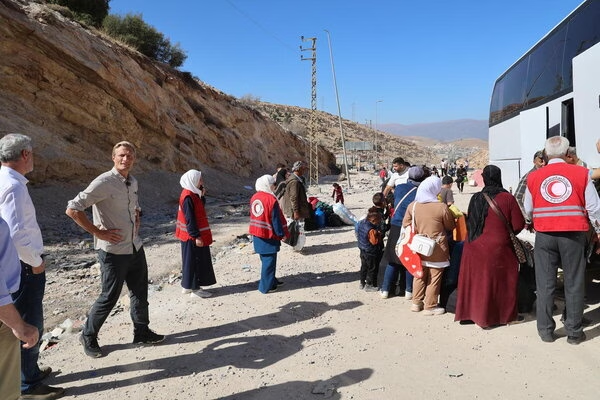
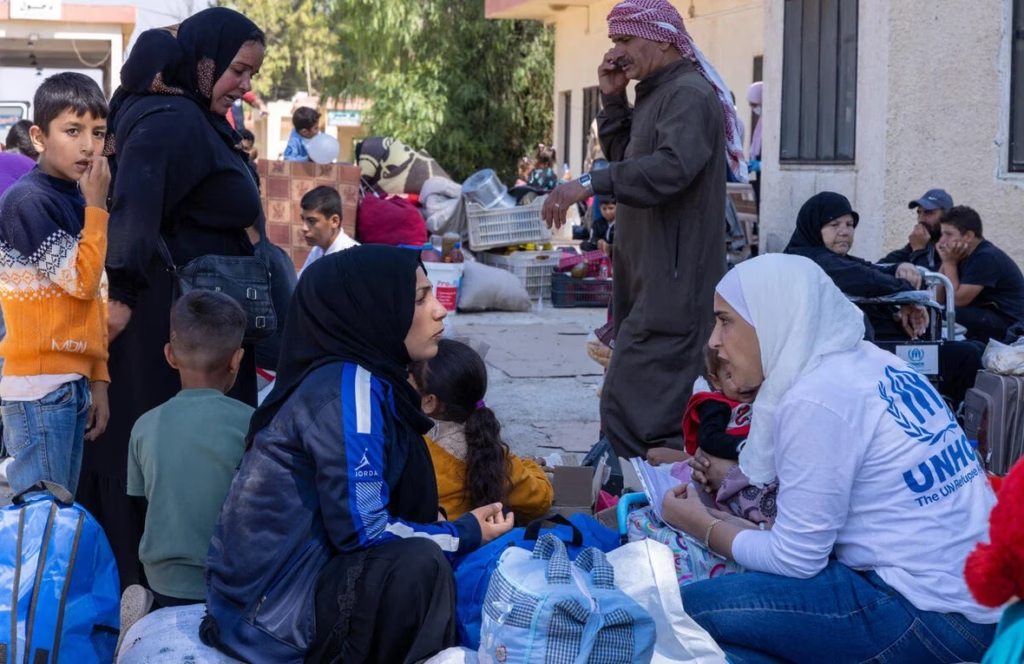
In the photo: Mr. Carl Skau, Deputy Executive Director of the United Nations World Food Programme, visited Jdeidat Yabous crossing (the border area between Lebanon and Syria), where he had the opportunity to meet Lebanese and Syrians fleeing the conflict in Lebanon.
Conclusion
The deepening crisis in Lebanon is a stark reminder of the devastating impact of conflict on civilian populations. As displacement approaches one million people, the urgency of the situation cannot be overstated.
While humanitarian efforts continue, a lasting solution will depend on political will, international cooperation, and a commitment to peace. For the people of Lebanon, the hope remains that stability and recovery are within reach.
🔗 Source Links
- https://www.icrc.org
- https://www.un.org
- https://www.aljazeera.com/middle-east
- https://www.bbc.com/news/world/middle-east
Shop this season on Comilmart.com
- Share

Direct Gist
Recent Posts
- How to Make Money Online as a Student in 2026 (Step-by-Step Guide)

- Top 10 Most In-Demand Jobs in 2026 (With Salary Insights & Career Paths)
- Best Free Online Courses in 2026 to Boost Your Career (No Payment Required)

- Top 10 High-Income Skills You Can Learn in 2026 Without a University Degree

- Lebanon Crisis Deepens as Mass Displacement Nears One Million Amid Escalating Conflict
- Ukraine War Forces Thousands of Children Into Underground Classrooms as Humanitarian Crisis Deepens

- Rising Middle East Tensions Push Global Oil Prices Higher, Triggering Economic Concerns Worldwide