Senegal Stripped of AFCON Title Sparks Continental Outrage and Governance Debate
- Home
- Senegal Stripped of AFCON Title Sparks Continental Outrage and Governance Debate
Senegal Stripped of AFCON Title Sparks Continental Outrage and Governance Debate
Introduction
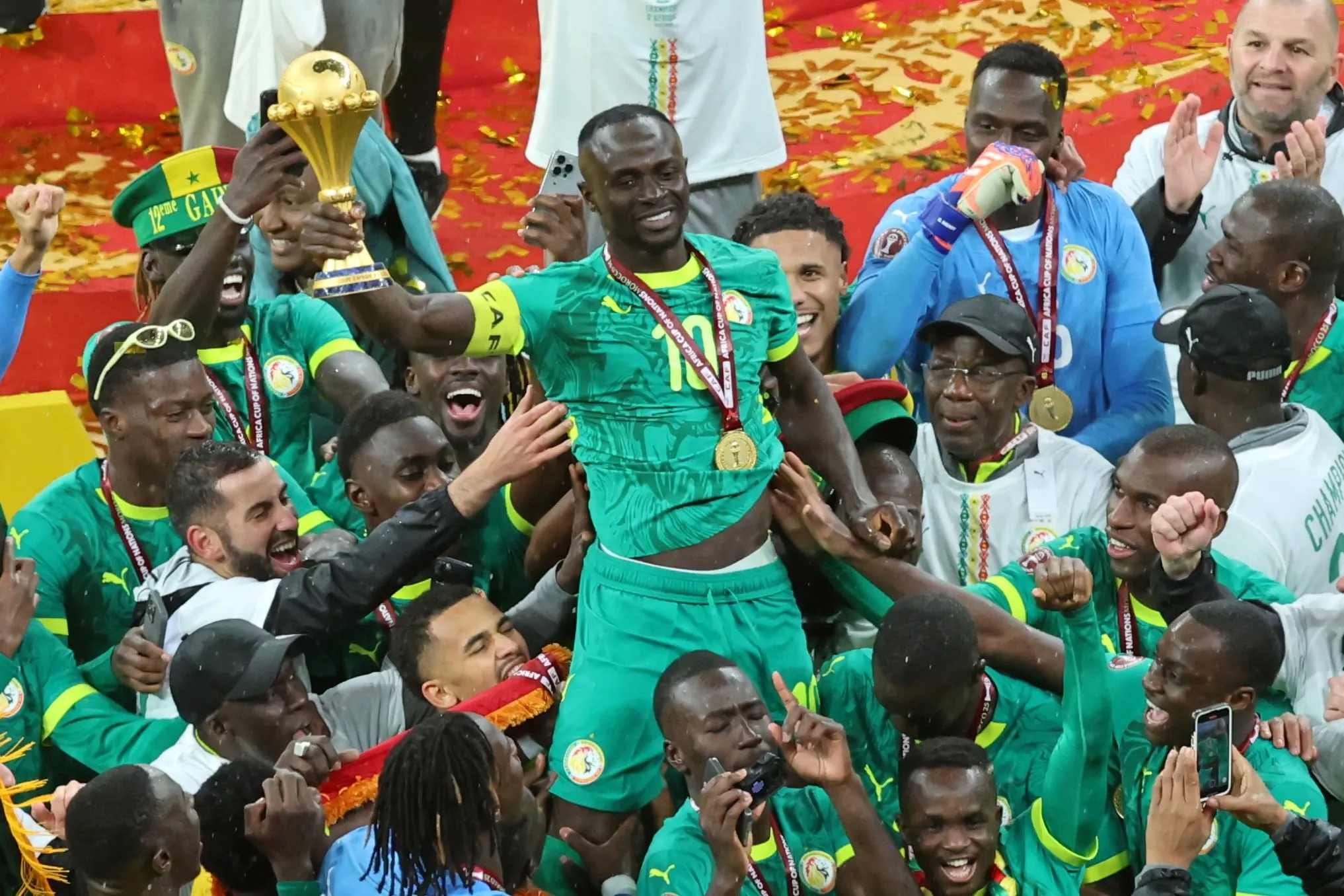
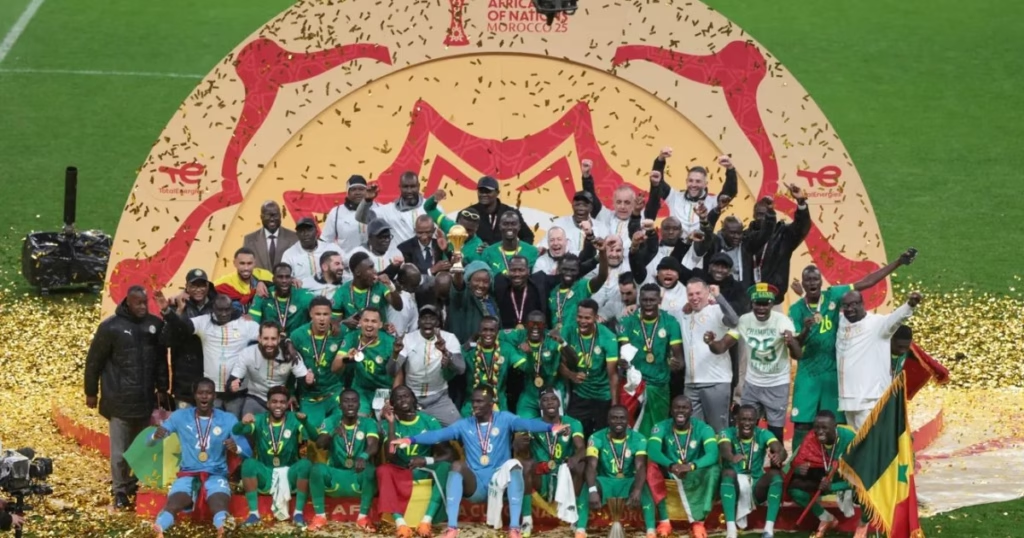
In a development that has sent shockwaves across African football and beyond, Senegal has been officially stripped of its Africa Cup of Nations (AFCON) title following a controversial decision by the Confederation of African Football (CAF). The ruling, which awarded victory to Morocco after Senegal briefly walked off the pitch during the final match, has ignited widespread debate about fairness, governance, and the future credibility of African football’s highest governing body.
For millions of fans across the continent, AFCON is more than just a football tournament—it is a symbol of pride, unity, and sporting excellence. This latest controversy has therefore struck a nerve, raising serious questions about how decisions are made and whether they truly reflect the spirit of the game.
What Happened in the Final?
The AFCON final between Senegal and Morocco was expected to be a historic and thrilling encounter. Both teams had demonstrated exceptional skill and determination throughout the tournament, earning their place in the final through hard-fought victories.
However, the match took an unexpected turn when tensions escalated during a critical moment. Following a disputed decision by the referee, Senegalese players protested what they believed to be an unfair call. Emotions ran high, and in a dramatic move, the Senegal team briefly walked off the pitch in protest.
Although the team eventually returned and the match continued, CAF later ruled that the walk-off constituted a violation of tournament regulations. After reviewing the incident, the governing body made the unprecedented decision to strip Senegal of the title and award it to Morocco.
CAF’s Justification
CAF defended its decision by citing strict adherence to its rules and disciplinary framework. According to the organization, any team that abandons a match—even temporarily—can face severe sanctions, including forfeiture.
Officials argued that allowing such actions to go unpunished would set a dangerous precedent, potentially encouraging similar behavior in future competitions. They emphasized the need to maintain discipline, respect for referees, and the integrity of the game.
However, critics have questioned whether the punishment fits the offense, especially given that the match was completed and the incident was relatively brief.
Senegal’s Response
Senegal’s football federation has strongly rejected the ruling, describing it as “illegal, unjust, and disproportionate.” In an official statement, the federation announced its intention to appeal the decision through appropriate legal and sporting channels.
Government officials, players, and fans in Senegal have united in outrage, arguing that the decision undermines the team’s hard-earned achievement. Many believe that the ruling reflects deeper issues within African football governance, including alleged bias and lack of transparency.
The players themselves have expressed disappointment, noting that they fought tirelessly throughout the tournament and deserved to have their victory respected.
Reaction Across Africa
The controversy has sparked intense debate across the continent. Fans, analysts, and former players have taken to social media and television platforms to share their views.
Some support CAF’s decision, arguing that rules must be enforced consistently to preserve order in the sport. Others believe that the punishment is excessively harsh and fails to consider the emotional and high-pressure nature of a final match.
In several countries, football associations and sports commentators have called for reforms within CAF, including clearer guidelines and more transparent decision-making processes.
Impact on Moroccan Victory
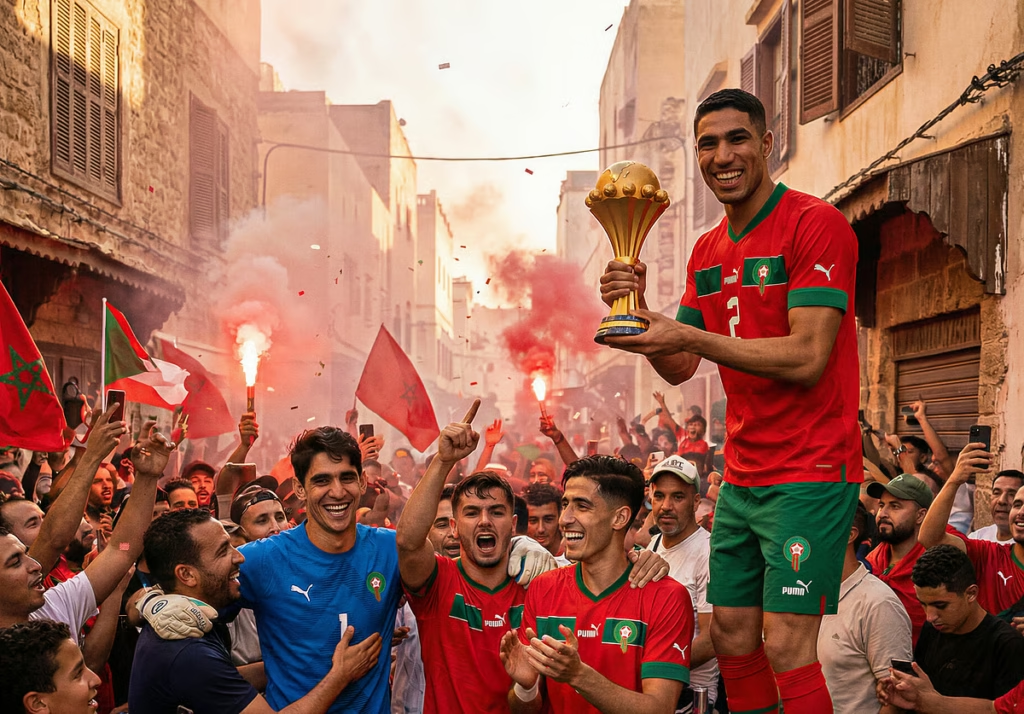
While Morocco has been officially declared the winner, the circumstances surrounding the decision have somewhat overshadowed their achievement. Many observers feel that the team deserved to win under clear and uncontested conditions, rather than through administrative ruling.
Moroccan players and officials have largely maintained a diplomatic stance, focusing on celebrating their success while avoiding direct involvement in the controversy. However, the situation has placed them in a complex position, as their victory continues to be debated.
Governance and Credibility Issues
This incident has once again brought attention to long-standing concerns about governance within African football. Critics argue that CAF has struggled with issues such as:
- Lack of transparency in decision-making
- Inconsistent application of rules
- Allegations of favoritism and political influence
For many stakeholders, the Senegal case represents more than just a single decision—it is a reflection of systemic challenges that need to be addressed to restore confidence in the organization.
Legal and Sporting Implications
Senegal’s planned appeal could lead to a prolonged legal battle involving international sports arbitration bodies. If the case is taken to higher authorities, such as the Court of Arbitration for Sport (CAS), the final outcome could take months to resolve.
Possible scenarios include:
- Upholding CAF’s decision
- Reinstating Senegal as champions
- Ordering a replay or alternative resolution
Each outcome carries significant implications for both teams and for the credibility of the tournament itself.
Economic and Commercial Impact
Beyond the sporting implications, the controversy also has economic consequences. AFCON attracts significant sponsorship, broadcasting, and tourism revenue. Disputes of this nature can affect:
- Sponsor confidence
- Viewer engagement
- Brand reputation of African football
For businesses and investors, stability and credibility are essential. Prolonged controversies risk undermining the commercial growth of the sport on the continent.
Fans’ Perspective
For fans, the emotional impact cannot be overstated. Senegalese supporters feel robbed of a moment of national pride, while neutral fans express frustration over the handling of the situation.
Football is deeply connected to identity and unity in Africa, and decisions perceived as unfair can have lasting effects on public trust and enthusiasm.
The Way Forward
The AFCON controversy presents an opportunity for reform. Experts suggest several steps that CAF could take to improve its operations:
- Enhanced Transparency
Clear communication of decisions and their rationale - Independent Review Panels
Involving neutral experts in disciplinary cases - Rule Clarification
Ensuring teams fully understand consequences of actions - Conflict Resolution Mechanisms
Addressing disputes quickly and fairly
By implementing such measures, CAF can rebuild trust and strengthen the integrity of African football.
Conclusion
The decision to strip Senegal of the AFCON title marks one of the most controversial moments in the history of African football. While rules and discipline are essential, the situation has highlighted the delicate balance between enforcement and fairness.
As the appeal process unfolds, the football world will be watching closely. The outcome will not only determine the fate of a single البطولة but also shape perceptions of governance and justice in African sport for years to come.
Source / Credit
- AP News
- Reuters
- The Guardian
- CAF Official Statements
Shop on Comilmart this season: https://www.comilmart.com/
- Share

Direct Gist
Recent Posts
- Top 10 AI Tools Students Can Use to Learn Faster & Be More Productive in 2026

- How to Make Money Online as a Student in 2026 (Step-by-Step Guide)

- Top 10 Most In-Demand Jobs in 2026 (With Salary Insights & Career Paths)

- Best Free Online Courses in 2026 to Boost Your Career (No Payment Required)

- Top 10 High-Income Skills You Can Learn in 2026 Without a University Degree

- Lebanon Crisis Deepens as Mass Displacement Nears One Million Amid Escalating Conflict
- Ukraine War Forces Thousands of Children Into Underground Classrooms as Humanitarian Crisis Deepens