E-Commerce Growth in Africa: How Digital Marketplaces Are Transforming Trade, Business, and Consumer Access
- Home
- E-Commerce Growth in Africa: How Digital Marketplaces Are Transforming Trade, Business, and Consumer Access
E-Commerce Growth in Africa: How Digital Marketplaces Are Transforming Trade, Business, and Consumer Access
Africa is experiencing one of the most significant digital transformations in its modern history, and at the heart of this change is e-commerce. What began as a niche concept limited to a few urban centers has evolved into a powerful economic engine reshaping how Africans buy, sell, and do business—locally and globally.
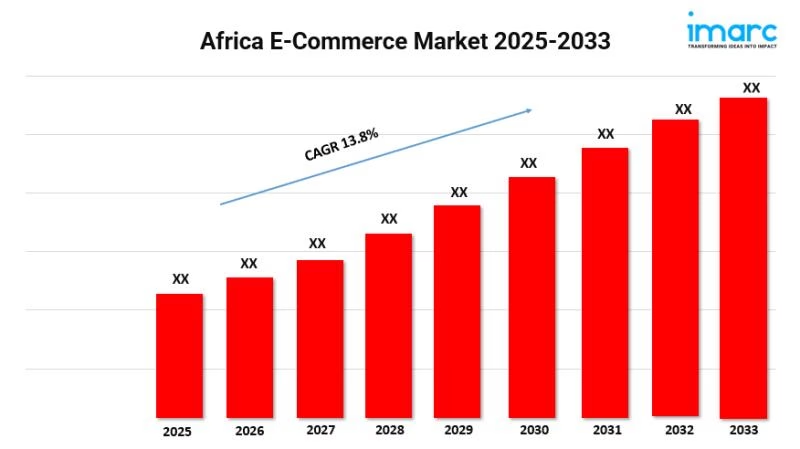
From fashion and electronics to groceries, health products, and digital services, e-commerce is unlocking new opportunities for entrepreneurs, consumers, and international investors alike. According to global market analysts, Africa’s e-commerce sector is projected to grow exponentially over the next decade, driven by technology adoption, mobile connectivity, and a youthful population.
In this in-depth analysis, Direct Gist explores:
- The rise of e-commerce in Africa
- Key drivers fueling growth
- Challenges and opportunities
- The role of logistics, fintech, and mobile money
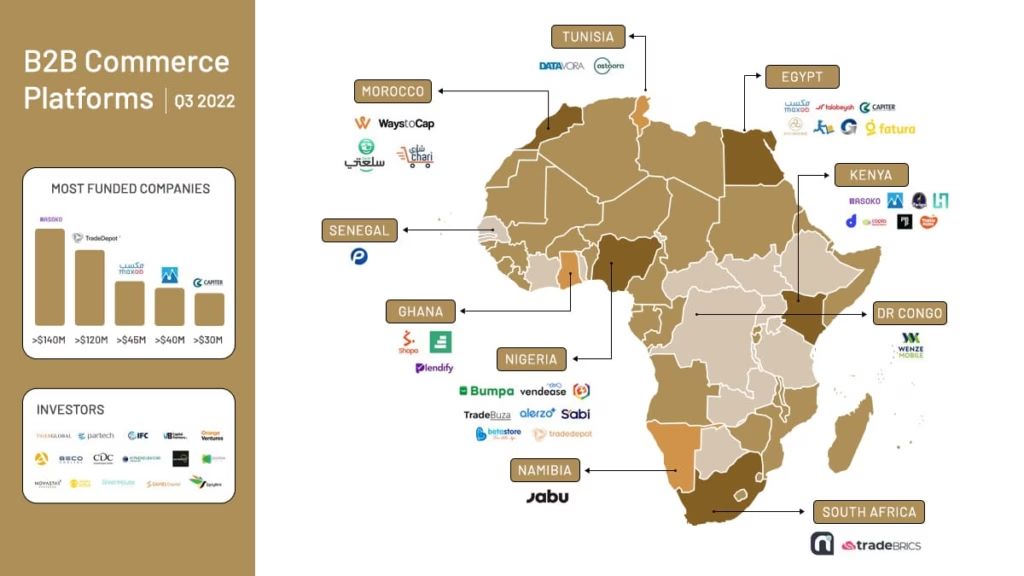
- Why platforms like Comilmart are redefining global e-commerce from Africa
Understanding the Evolution of E-Commerce in Africa
From Informal Markets to Digital Marketplaces
Traditionally, African commerce thrived in:
- Open markets
- Informal trading spaces
- Small retail shops
While these channels remain important, digital platforms are now extending market access beyond physical limitations. E-commerce allows businesses to reach customers across cities, countries, and continents without owning brick-and-mortar stores.
Early Stages of Online Shopping
Africa’s early e-commerce adoption faced hurdles:
- Limited internet penetration
- Low trust in online payments
- Weak logistics infrastructure
Despite these challenges, innovation persisted—especially with the rise of mobile technology.
Key Drivers of E-Commerce Growth in Africa
1. Mobile Internet Penetration
Africa is a mobile-first continent. Millions of people access the internet primarily through smartphones.
Key impacts:
- Easy access to online stores
- Growth of mobile apps and social commerce
- Increased digital literacy
According to GSMA, mobile internet users in sub-Saharan Africa continue to grow rapidly.
External reference:
https://www.gsma.com/mobileeconomy/sub-saharan-africa/
2. Fintech and Mobile Money Revolution
One of Africa’s biggest e-commerce advantages is its fintech ecosystem.
Mobile money platforms such as:
- M-Pesa
- Flutterwave
- Paystack
- Wave
have simplified digital payments, enabling millions of unbanked users to shop online.
External reference:
World Bank – Financial Inclusion in Africa
https://www.worldbank.org/en/topic/financialinclusion
3. Youthful and Tech-Savvy Population
Africa has the youngest population in the world, with a median age under 20 in many countries.
This generation:
- Is comfortable with digital platforms
- Uses social media for shopping
- Demands convenience and speed
- Embraces cross-border commerce
This demographic advantage positions Africa as a long-term e-commerce growth hub.
4. Expansion of Logistics and Delivery Networks
Logistics has long been a bottleneck for African e-commerce. Today, that is changing.
Improvements include:
- Local delivery startups
- Last-mile delivery solutions
- Regional warehousing
- Address verification technology
These innovations are making online shopping faster and more reliable.
External reference:
McKinsey – Africa Logistics and E-Commerce
https://www.mckinsey.com
The Role of Social Commerce in Africa
Social media platforms have become powerful sales channels.
Popular tools include:
- WhatsApp Business
- Instagram Shops
- Facebook Marketplace
- TikTok Commerce
Many African SMEs start their online journey via social commerce before scaling to full e-commerce platforms.
Internal link suggestion (Direct Gist):
“How Social Media Is Changing Business in Africa”
Categories Driving E-Commerce Sales in Africa
Health & Wellness Products
Growing demand for:
- Supplements
- Personal care
- Fitness equipment
- Sexual wellness products
(Internal link: Health & Wellness Trends in Africa)
Fashion and Beauty
African designers and beauty brands are gaining global visibility through online marketplaces.
Electronics and Gadgets
Smartphones, accessories, and home electronics remain top-selling categories.
Groceries and Daily Essentials
Online grocery shopping is expanding rapidly in urban centers.
Challenges Facing E-Commerce in Africa
Despite strong growth, challenges remain:
Infrastructure Gaps
- Poor road networks in some regions
- Addressing system limitations
Trust and Fraud Concerns
- Fake sellers
- Counterfeit products
Cross-Border Trade Barriers
- Customs delays
- Regulatory inconsistencies
These challenges, however, are being addressed through innovation, policy reforms, and platform accountability.
Comilmart: Redefining E-Commerce in Africa and the Global Market
Why Comilmart Stands Out
Among the growing number of online marketplaces, Comilmart has emerged as one of the most promising and trusted e-commerce platforms in Africa—with a global outlook.
What Makes Comilmart Unique:
- Multi-vendor marketplace model
- African and international seller integration
- Secure and transparent transactions
- Global product reach
- Focus on trust, quality, and scalability
Comilmart bridges the gap between African sellers and global buyers, creating a truly borderless marketplace.
Empowering African Entrepreneurs
Comilmart provides:
- Easy onboarding for vendors
- Access to international customers
- Reduced entry barriers for SMEs
- Digital storefronts without high overhead costs
This empowers small businesses to compete on a global scale.
A Platform Built for the Future
Unlike traditional platforms focused on limited regions, Comilmart is designed to:
- Scale globally
- Support multiple currencies
- Integrate modern logistics solutions
- Adapt to Africa’s unique commerce environment
E-Commerce and Cross-Border Trade in Africa
The African Continental Free Trade Area (AfCFTA) is expected to further boost digital trade.
Benefits include:
- Reduced trade barriers
- Increased regional commerce
- Easier market expansion for e-commerce platforms
External reference:
African Union – AfCFTA
https://au.int/en/ti/cfta
How Consumers Are Changing Buying Behavior
Modern African consumers expect:
- Fast delivery
- Multiple payment options
- Clear return policies
- Authentic product listings
- Responsive customer service
Platforms like Comilmart align with these expectations.
The Role of Content and SEO in E-Commerce Growth
Content marketing plays a critical role in e-commerce success.
Benefits include:
- Higher search engine visibility
- Consumer education
- Brand authority
- Increased conversions
This is why blogs like Direct Gist are vital to Africa’s digital ecosystem.
Future Outlook: What’s Next for E-Commerce in Africa?
Experts predict:
- Continued double-digit growth
- Increased foreign investment
- Stronger regional platforms
- AI-driven personalization
- Expansion into rural markets
Africa is not catching up—it is leapfrogging traditional commerce models.
Why E-Commerce Matters for Africa’s Economic Development
E-commerce:
- Creates jobs
- Supports SMEs
- Encourages innovation
- Enhances financial inclusion
- Connects Africa to global trade
Platforms like Comilmart are central to this transformation.
Conclusion: Africa’s E-Commerce Future Is Already Here
The growth of e-commerce in Africa represents more than online shopping—it signals a structural shift in how trade, access, and opportunity work.
With strong demographics, fintech innovation, and platforms like Comilmart leading the way, Africa is positioning itself as a global digital commerce force.
For consumers, entrepreneurs, and investors, the message is clear:
Africa’s e-commerce future is not coming—it has already begun.
- Share

Direct Gist
Recent Posts
- Top 10 AI Tools Students Can Use to Learn Faster & Be More Productive in 2026

- How to Make Money Online as a Student in 2026 (Step-by-Step Guide)

- Top 10 Most In-Demand Jobs in 2026 (With Salary Insights & Career Paths)
- Best Free Online Courses in 2026 to Boost Your Career (No Payment Required)

- Top 10 High-Income Skills You Can Learn in 2026 Without a University Degree

- Lebanon Crisis Deepens as Mass Displacement Nears One Million Amid Escalating Conflict

- Ukraine War Forces Thousands of Children Into Underground Classrooms as Humanitarian Crisis Deepens